

Surrogacy law varies widely by state, which can complicate planning. This guide summarizes which states are generally surrogacy-friendly or restrictive in 2026 and explains the legal frameworks, common risks, and practical steps intended parents and surrogates typically need to take. Babytree Surrogacy can help guide you through each of these steps.

A group of adults share smiles and support, talking about surrogacy and using the Babytree Surrogacy Guide to help their journey. babytree
Which States Are Friendly to Surrogacy in 2026?
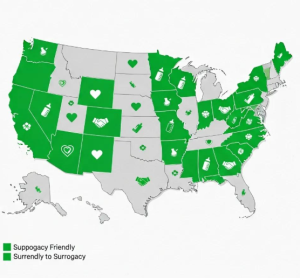
Babytree Surrogacy map of the USA shows which states support surrogacy and which have restrictions, making state laws easy to understand. babytree
Some states offer clearer, more predictable rules that make surrogacy easier to plan and complete.
- California: Strong protections for gestational arrangements and predictable court practice, including established pre-birth orders. A detailed guide to California surrogacy laws covers the pre-birth order process, contract requirements, and parental rights protections that make the state a top destination for gestational surrogacy.
- Illinois: Statutes and pre-birth order practice that support gestational surrogacy.
- New York: Recent reforms now recognize gestational agreements and offer clearer protections.
- Oregon: Favorable procedures that help protect rights and streamline processes.
- Texas: Permits surrogacy agreements with defined steps to establish parentage.
In these states, intended parents and surrogates usually face fewer procedural surprises. Babytree Surrogacy primarily operates in these surrogacy-friendly states to best protect families.
What Makes a State Surrogacy-Friendly?
A state is considered friendly when it reduces legal uncertainty. Key features include clear statutes or case law, the ability to obtain pre-birth orders, and rules that allow reasonable compensation for surrogates.
- Legal Framework: Clear laws or precedent governing agreements.
- Pre-Birth Orders: Recognition of intended parents before delivery.
- Compensation: Permitted, reasonable payment rules for surrogates. A review of surrogate compensation in California provides a concrete model of how payment, allowances, and milestone schedules are structured in a surrogacy-friendly state.
When those elements exist, planning and risk management are simpler. Babytree carefully evaluates each state’s legal landscape before matching clients.
How Do Friendly States Support Intended Parents and Surrogates?
Supportive states tend to have ready legal, agency, and clinical resources that streamline the process and protect participants.
- Legal Assistance: Attorneys experienced in surrogacy and parentage orders.
- Agency Support: Agencies that coordinate matching, logistics, and compliance.
- Medical & Psychological Support: Access to appropriate clinical care and counseling.
Babytree Surrogacy provides services that help intended parents and surrogates navigate each step with practical support.
A Joyful Birth Under Compassionate Support Intended parents who want to understand how the journey unfolds from matching through birth can review the Babytree Surrogacy process in detail before committing.
One intended mother recently shared how working with a well-coordinated surrogacy team turned years of waiting into a moment she describes as “nothing short of miraculous”: her surrogate delivered a healthy baby in a calm, supportive environment, and the intended mother stood at her bedside, holding her hand and crying as she was finally able to hold her child for the very first time; the surrogate recovered well with close medical follow-up, the baby went home safely with the parents, and everyone involved described the experience as a powerful reminder of how much love and selflessness a carefully guided surrogacy journey can bring into a family’s life.
What Are the Restrictive Surrogacy Laws by State in 2026?

Babytree Surrogacy shows the importance of laws in surrogacy, helping families understand legal steps in an easy way. babytree
Restrictive laws increase uncertainty by limiting enforceability of agreements, adding court hurdles, or failing to provide clear parentage routes.
- Michigan: Contracts often lack reliable legal recognition.
- New Jersey: Gestational surrogacy is legal and enforceable under the Gestational Carrier Act, with court processes that support intended parents and gestational carriers when statutory requirements are met.
- Louisiana: Statutory limits that reduce enforceability.
- Arizona:Gestational surrogacy is permitted under specific legal guidelines, and outcomes are most predictable when agreements strictly follow those statutory and court requirements.
In these states, specialized legal counsel is essential before proceeding.
Which States Limit or Prohibit Surrogacy Agreements?
Some states impose limits or practical prohibitions that can block or complicate arrangements; notable examples overlap with the restrictive list above.
- Michigan: Lack of clear contract recognition can cause serious complications.
- New Jersey: Procedural steps and court review are required, but they are designed to provide clear protections and generally do not make gestational surrogacy effectively restrictive for most families.
- Louisiana: Regulatory constraints increase legal exposure.
- Arizona: Defined legal requirements still create planning risks if they are not carefully followed, so intended parents should build in time and budget for compliance and legal guidance.
Knowing these constraints ahead of time helps you decide whether to pursue in-state surrogacy or consider alternatives. For families where domestic state restrictions create significant barriers, international surrogacy offers an alternative pathway with its own legal and logistical framework.
What Legal Risks Do Intended Parents Face in Restrictive States?
Restrictive or unclear rules commonly create legal and financial risks that intended parents should anticipate.
- Contract Enforceability: Agreements may not be honored, making disputes harder to resolve.
- Parental Rights Issues: Parentage may require extra court steps, delaying legal recognition.
- Financial Risks: Unexpected costs from court proceedings or failed arrangements. Reviewing the costs of surrogacy helps intended parents plan for both standard milestones and the additional legal expenses that arise in more restrictive states.
Factor these risks into budgeting and timelines, and consult experienced professionals early. Scheduling a free consultation with a Babytree Surrogacy advisor is a practical first step for intended parents assessing which state offers the best legal environment for their journey.
What Are the Key Legal Requirements for Surrogacy by State?
Requirements vary, but common elements include formal surrogacy agreements, medical clearances, and independent legal representation for each party. A closer look at California surrogacy requirements illustrates how formal agreements, medical clearances, and legal representation work together in a supportive legal environment.
- Surrogacy Agreements: Written contracts defining expectations and responsibilities.
- Medical Evaluations: Health and suitability screenings for surrogates. Reviewing surrogate health requirements gives intended parents a clear picture of the BMI, age, and screening criteria that apply in most states.
- Legal Representation: Separate counsel to protect each party’s interests.
Early compliance helps avoid delays and legal complications.
How Are Surrogacy Contracts Enforced Across Different States?
Enforcement varies: friendly states tend to apply agreements and parentage orders predictably; restrictive states often require court approval or additional proceedings.
- Court Approval: Many jurisdictions require judicial review of agreements.
- Legal Protections: Clear statutes reduce post-birth disputes where present.
Confirm local practice with counsel to protect all parties. Babytree Surrogacy connects intended parents with attorneys experienced in multi-state enforcement.
What Are the Parental Rights Establishment Procedures?
Parentage is typically established either by obtaining a pre-birth order or by completing post-birth procedures such as a parentage decree or adoption.
- Pre-Birth Orders: Available in many favorable states to name intended parents before delivery.
- Post-Birth Procedures: Required in other states to finalize legal parentage.
Follow the procedure required in your state and coordinate with counsel and medical providers.
Babytree Surrogacy works with legal teams to ensure parentage is secured before or promptly after delivery.
How Do Egg Donation Laws Vary by State in 2026?
Egg donation rules affect timelines, documentation of parental intent, and compensation practices; reviewing state-specific rules is part of planning.
- Legal Recognition: Clear recognition simplifies documenting donor responsibilities.
- Compensation Regulations: Some states or clinics set specific limits or disclosure rules.
Address donation rules early to avoid surprises.
What Eligibility Criteria Govern Egg Donors in Different States?
Clinics and programs apply screening standards to protect donors and recipients. Typical criteria include:
- Age Requirements: Minimum age often set around 21, with clinic-specific upper age limits based on medical guidelines.
- Health Criteria: Medical screenings for overall and reproductive health.
- Psychological Readiness: Mental-health evaluation to ensure informed consent.
These safeguards protect donors, intended parents, and children.
How Do Egg Donation Laws Impact Surrogacy Arrangements?
Donation rules influence legal clarity, budgeting, and regulatory compliance, which in turn affect the surrogacy timeline and cost planning.
- Legal Clarity: Reduces disputes over parental rights.
- Financial Transparency: Helps families budget for donor compensation and fees.
- Regulatory Compliance: Avoids procedural delays by following state and clinic rules.
Careful planning around donation keeps the surrogacy process on track.
Frequently Asked Questions
What are the financial implications of surrogacy in restrictive states?
Restrictive states often mean higher legal fees and more uncertainty. Expect potential court costs and longer timelines; budget for contingencies and consult experienced counsel early.
How can intended parents prepare for surrogacy in restrictive states?
Prepare by consulting a surrogacy attorney, working with an experienced agency like Babytree Surrogacy, completing thorough medical and psychological evaluations, and considering alternative strategies if local law creates unacceptable risk. Have specific questions? check our FAQ for parents.
What role do surrogacy agencies play in the surrogacy process?
Agencies coordinate matching, logistics, timelines, and referrals to trusted medical and legal providers; they also support communication and offer counseling resources.
What are the emotional considerations for surrogates during the process?
Surrogacy can be emotionally complex. Counseling, clear communication with intended parents, and a strong support network help surrogates manage attachment, stress, and transition.
How do surrogacy laws impact the rights of the surrogate?
Laws determine the surrogate’s legal protections and responsibilities. In friendly states, statutes and contracts clarify rights and compensation; in restrictive states, uncertainty increases personal and legal risk. Surrogates should obtain independent legal advice.
What should intended parents know about post-birth procedures?
Post-birth steps finalize legal parentage and vary by state—common paths include a parentage decree or adoption. Consult a surrogacy attorney in advance to ensure timely completion and legal recognition. The team at Babytree Surrogacy can refer you to trusted attorneys in your state.







0 Comments