

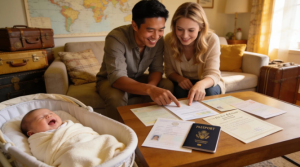
A joyful couple reviews their newborn’s documents while their happy baby rests nearby, ready for a new journey.
Traveling after a surrogate birth is both joyful and detail-heavy. This guide breaks down the paperwork and embassy steps international intended parents commonly face when securing a newborn’s passport and other travel documents. While families celebrate their new child, they must also manage legal and administrative requirements that differ by country. Below we cover visa basics, post-birth paperwork, embassy procedures, and practical checklists to help you plan travel with confidence. For a full view of how we support intended parents through each stage, see our intended parent services.
Visa Requirements
The first practical step for international intended parents is understanding visa rules for the country you’ll travel to. For the United States, that commonly means applying for a B-2 tourist visa, which can cover short-term travel for tourism, visiting family, or medical-related purposes. Visa approval depends on the traveler’s nationality and the purpose of travel, so families should confirm the correct visa category for their situation rather than assuming one visa fits every case.
Post-Birth Documentation
Securing post-birth documents quickly is essential for international travel with a newborn. Key items usually include the child’s official birth certificate and the newborn passport application. In many cases, the birth certificate must be issued before the child’s passport application can move forward, so delays in civil registration can affect travel plans. Legal requirements and administrative steps vary, so understand the processes that apply to your situation.
What Documents Are Required for the Newborn Passport Application?
When applying for a newborn passport, international intended parents should prepare the following:
- Birth Certificate: A certified copy of the official birth certificate issued where the baby was born.
- Evidence of Parental Rights: Documents such as a certified surrogacy agreement or a court order that confirm parental status.
- Identification for Parents: Valid ID for both parents (passports or driver’s licenses) to verify identity and guardianship.
Some jurisdictions and embassies may ask for additional evidence, such as notarized consent forms, proof of residence, or translated documents if the papers are not in the required language. Families comparing cross-border requirements often start with our international surrogacy planning resources before booking embassy appointments.
What Is the Step-by-Step Process for Passport Application After Surrogacy Birth?
The typical passport application process includes these steps:
- Gather Necessary Documents: Collect the birth certificate, parental-rights evidence, and parental IDs.
- Complete the Application Form: Fill out the DS-11 (or the country’s equivalent) for a new passport.
- Submit the Application: Deliver the completed form and supporting documents in person at an authorized acceptance facility; both parents may need to attend.
- Pay the Fees: Pay the applicable passport fees — accepted payment methods can vary by location.
- Await Processing: Standard processing often takes 8–12 weeks; expedited services may be available for an extra fee.
In surrogacy cases, the most common delay is not the form itself but waiting for the birth certificate or parental-rights documents to be finalized. That is why planning ahead matters.
Embassy Procedures and Requirements for Newborns Born via Surrogacy
Working with embassies can feel overwhelming, but knowing common procedures helps you move more efficiently. Requirements differ by country: some embassies have specific rules for newborns born through surrogacy. Typical steps include registering the child’s birth, submitting a passport application, and providing any embassy-specific travel letters. Some embassies also require the intended parents to attend an appointment in person with the baby, especially when parentage documents are being reviewed.
Which Embassy Documents Must International Parents Prepare?
When you go to the embassy, plan to bring these core items:
- Original Birth Certificate: The official certificate needed for registration and identification.
- Passport Application: A completed passport form for the child.
- Travel Letters: Any required letters confirming the parental arrangement and relevant legal agreements related to the surrogacy.
You should also keep copies of the surrogacy agreement, parentage order, and any notarized translations, since embassy staff may ask for supporting paperwork beyond the basics.
How Do Newborn Citizenship and Parental Rights Affect After Birth Travel?
Citizenship and parental-rights documentation directly shape the passport and travel process. For example, children born in the U.S. are generally eligible for U.S. citizenship under the 14th Amendment, which affects passport eligibility and application steps. However, citizenship rules for the child’s other country of nationality may be very different, so international intended parents should verify both sides of the travel and citizenship process early. Clear, court-recognized parental rights are crucial — inconsistencies or gaps can cause significant problems when traveling. Reviewing a California legal overview can also help intended parents understand which court orders and identity documents should be finalized before travel.
What Essential Documents and Checklists Support Smooth After Birth Travel?
Staying organized with checklists makes embassy visits and passport appointments far less stressful. Track required documents at each stage and keep copies ready. Understanding expected surrogacy costs and timelines also helps with planning and setting realistic expectations. A travel checklist should also include contingency plans for delays, local contact information, and a backup plan for lodging if the passport is not issued on time.
Which Birth and Medical Records Are Needed for International Travel?
For safe international travel, these records are commonly required:
- Birth Certificate: Used to confirm identity and any citizenship claims.
- Medical Records: Complete health documentation for travel and insurance purposes.
- Passport Documents: All forms and supporting materials needed to obtain the child’s passport.
Some families may also need discharge paperwork from the hospital or a letter from the newborn’s doctor confirming the child is fit to travel.
Anonymous Intended Parent 1: “We knew the birth certificate and passport process would take planning, but having a clear checklist made every A broader step-by-step surrogacy process guide can also help families place the passport stage within the full timeline from matching to post-birth paperwork.thing feel manageable. Once we had the documents ready, the embassy appointment went much more smoothly than we expected.”
What Stepwise Checklists Help Prepare for Embassy and Passport Visits?
Use focused checklists to prepare for embassy appointments and passport submissions. Include items such as:
- Document Checklist: Verify that all required documents are printed, certified if necessary, and organized before your visit.
- Questions for Embassy Staff: List specific questions about procedures, acceptable documents, and timelines for your case.
- Application Status Review: Confirm the current status of any pending paperwork to make in‑person discussions productive.
It can also help to separate documents into two folders: one for originals and one for copies, so embassy or passport officers can review materials without slowing the appointment.
Procedures and requirements vary by post and jurisdiction. With thoughtful preparation and the right documents, intended parents can usually navigate post-birth travel successfully and return home smoothly with their newborn.
For answers to common concerns, see our FAQ page. If you’re considering international surrogacy, consult experienced professionals who can guide your specific case. Many agencies offer an initial meeting schedule a free consultation to review your situation and next steps.
Anonymous Intended Parent 2: “The hardest part was waiting on the paperwork after birth, not the birth itself. Having support from the agency and knowing which forms to prepare helped us avoid mistakes and focus on getting our baby home.”
Frequently Asked Questions
What Are the Common Challenges Faced by Intended Parents After Birth?
After birth, intended parents commonly face paperwork delays, uncertainty about embassy procedures, and varying legal rules across countries. Typical pain points include waiting for the birth certificate, confirming parental rights, and ensuring compliance with immigration requirements. These issues can be stressful, but planning and professional support greatly reduce friction. The biggest delays usually come from missing or inconsistent documents rather than from the passport application itself.
Can Newborns Travel on a Parent’s Passport?
No — every child must travel on their own passport for international travel. Applying for a child’s passport as soon as you have the necessary documents (birth certificate and proof of parental rights) helps prevent complications at border crossings.
How Long Does It Take to Get a Passport for a Newborn?
Standard passport processing typically takes about 8 to 12 weeks. Expedited services are often available for an extra fee and can shorten that timeline, sometimes to around five weeks. The exact timeline depends on the country issuing the passport and whether all supporting documents are complete.
Are There Specific Health Requirements for Newborns Traveling Internationally?
Yes. Some destinations require health documentation such as vaccination records, medical certificates, or notes about preexisting conditions. Always check the destination country’s embassy or consulate for detailed health-entry requirements before travel.
What Should Parents Include in Travel Letters for the Embassy?
Travel letters should confirm the child’s identity, explain the parents’ legal relationship to the child (for example, referencing the surrogacy agreement), and state the purpose of travel. Contact the embassy ahead of your appointment to confirm any required format or additional supporting documents.
How Can Intended Parents Stay Organized During the Documentation Process?
Staying organized means keeping a clear document checklist, saving both digital and printed copies, tracking deadlines, and maintaining open communication with your surrogacy agency and legal counsel. Regularly review application statuses and prepare questions for officials to keep the process moving smoothly. A shared timeline with the agency, lawyer, and travel coordinator can help prevent last-minute surprises.







0 Comments