


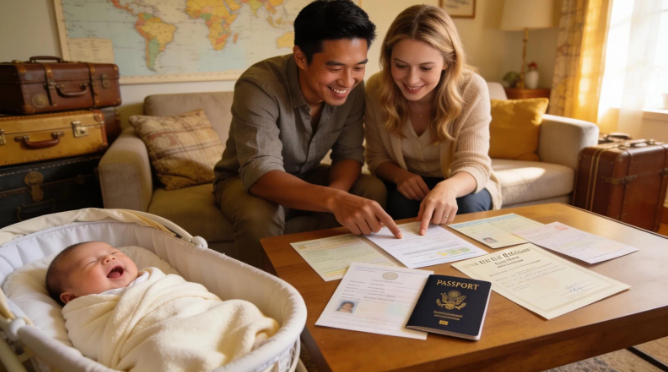
A happy couple with their newborn sits together, showing the joy of growing their family.
The steps to have intended parents named on a birth certificate after surrogacy in California are rooted in clear but detailed legal processes meant to protect parental rights. Intended parents should understand required filings and court orders so their names appear correctly on their child’s birth record. Below we explain how parentage is established, how certificates are issued, and the main legal considerations to watch for. Navigating surrogacy law early helps prevent disputes and secure your family’s legal standing.
Establishing Parental Rights
In most cases intended parents obtain a pre-birth parentage order that names them as the child’s legal parents before delivery, allowing their names to be placed directly on the birth certificate. In California, that order is commonly a pre-birth parentage order or judgment of parentage, and it is what allows the intended parents to be recognized as the legal parents from birth.
To secure that order you typically submit the surrogacy agreement and supporting documents and may attend a brief hearing.
A properly drafted surrogacy agreement is essential; it creates the legal foundation recognizing parental responsibilities and rights. But the agreement alone does not control the birth certificate; parentage must still be established through the court process or another legally recognized path. For a deeper breakdown of the clauses that usually shape parentage paperwork, review this surrogacy contract guide before filing court documents.
Birth Certificate Issuance
After delivery, the hospital issues a birth notification that the county registrar uses to begin the birth certificate process. In California, the hospital birth worksheet and registration process must match the legal parentage status already established, and the registrar relies on the correct court order or declaration before registration. Intended parents should present the pre-birth order and any required hospital paperwork, such as discharge records, when applying for the official certificate. Reviewing expected surrogacy costs can help you prepare financially. Processing time can vary by county, and the certificate is generally registered after the hospital and registrar complete the required filing steps rather than by a fixed 2-to-4-week rule.
| Document Type | Requirement | Purpose |
|---|---|---|
| Surrogacy Agreement | Required | Establishes the legal framework for parentage |
| Birth Notification | Required | Alerts the county registrar to the birth |
| Pre-Birth Order | Mandatory | Formally confirms legal parentage |
The table above lists the key documents you’ll need when securing a birth certificate after surrogacy. California law specifically requires the correct parentage basis before the non-birthing parent can be listed, and a surrogate court order is one of the recognized ways to do that.
How are intended parents legally recognized on California birth certificates?
California recognizes intended parents primarily through a pre-birth order. That court order names the intended parents as the child’s legal parents before birth, preventing the surrogate’s name from appearing on the certificate and clarifying parental rights at birth. More precisely, California birth registration depends on whether parentage has already been legally established; the record is then completed to reflect the legally recognized parents.
What rights do intended parents have under California surrogacy laws?
Intended parents in California generally have broad rights, including medical decision authority and legal recognition of parentage from birth when proper orders are in place. Valid surrogacy agreements and court orders protect those rights and offer stability for family responsibilities. Those rights are strongest once parentage has been legally established, because California law ties custody and visitation rights to legal parent status.
Legal Implications
Without proper legal steps—especially a pre-birth order—parental status can be contested. A court-issued pre-birth order establishes the foundation for custody and decision-making after birth. If the legal parentage step is missing or incomplete, the birth certificate may not list the intended parent the way the family expects, and later amendment can be needed.
If you are outside California, review international surrogacy regulations to understand cross-border effects.
It is also important to understand the surrogate’s legal rights and how they interact with intended parents’ responsibilities after delivery. California’s parentage rules distinguish the birth parent from the surrogate in gestational surrogacy cases, so the surrogate is not treated as the legal parent when parentage has been properly established.
Do surrogates appear on the birth certificate after surrogacy in California?
If intended parents obtain a pre-birth order, the surrogate will not be listed. The order records the intended parents as the child’s legal parents and keeps the surrogate’s role distinct from parental status. That outcome depends on the order being in place and the hospital/registrar following the required registration process.
Dispute Resolution
If a disagreement arises over parentage, parties often first pursue mediation to seek an amicable resolution. If mediation fails, courts will review surrogacy agreements and orders to resolve the dispute. Experienced legal counsel can protect parental rights and guide you through mediation or litigation.
Clear, well-drafted agreements and court orders are the most effective tools for preventing and resolving conflicts about parentage.
Inclusivity in California Law
California’s laws recognize a wide range of family structures, including same-sex couples and non-biological parents. The state’s framework accommodates different paths to parenthood so intended parents—regardless of biological ties—can secure legal recognition. For common questions, consult the parent FAQ. California courts and parentage rules recognize legal parentage based on more than biology, which is why non-birthing and non-biological intended parents can be listed when the legal process is completed correctly.
Residency Requirements
Residency in California is not strictly required for surrogacy, but non-resident intended parents should note extra legal considerations. Out-of-state parents must comply with California law and may need to address how their home state will recognize parentage. Thorough legal planning is important when arrangements cross state or national lines. The key point is that California procedure can establish parentage, but families should confirm how their home state will treat the resulting order and birth record. A California legal overview can help families compare local parentage rules with the recognition issues they may face back home.
Real Surrogate Experience
Anonymous Intended Parent: “We were nervous about the hospital process and baby handoff, but having a clear birth plan made everything feel much more manageable. Knowing who would be present, what paperwork was needed, and when the handoff would happen helped us stay calm and focus on supporting the surrogate and welcoming our baby.”
Anonymous Surrogate: “After reviewing the birth plan and talking through the hospital steps ahead of time, I felt much more at ease going into delivery. The clear plan helped me know what to expect, and it made the baby handoff feel respectful, organized, and calm for everyone involved.”
Frequently Asked Questions
What steps should intended parents take if the surrogate decides not to hand over the baby?
Review your surrogacy agreement and any court orders and contact your attorney immediately. Mediation may help, but urgent legal action could be necessary to enforce orders and protect parental rights under California law.
Can intended parents change the baby’s name on the birth certificate after it is issued?
Yes. To change a child’s name on a California birth certificate, file a petition for change of name with the court, provide a valid reason and supporting documents, and follow the court-approved process. Consulting an attorney will help ensure proper procedure.
How can intended parents ensure that their rights are protected internationally?
Research laws in each relevant country and consult an attorney experienced in international surrogacy. Securing pre-birth orders or comparable recognition in the jurisdictions involved and preparing proper documentation reduces the risk of complications when returning home.
What is the role of the surrogacy agency in the birth certificate process?
An agency typically guides intended parents through paperwork and timelines, coordinates with medical and legal providers, and assists with submitting documents like the pre-birth order. Agencies simplify logistics, but legal steps should always be verified with your attorney.
Is it possible to have a non-biological parent recognized on the birth certificate?
Yes. California permits non-biological parents to be listed when a pre-birth order or equivalent legal documentation establishes their parentage, reflecting the state’s inclusive approach. The legal basis matters more than biology once the parentage order is entered.
What happens if there is a dispute over parental rights after the birth?
Parties often start with mediation. If that does not resolve the matter, the case may proceed to court, where judges examine the surrogacy agreement and any orders to determine the outcome. Legal representation is crucial in these proceedings.
Securing parental rights and obtaining a birth certificate after surrogacy in California benefits from careful planning and proper documentation—particularly a pre-birth order. Working with qualified legal counsel helps ensure your rights are protected and the transition to parenthood is as smooth as possible.
To learn more about services tailored to these legal needs, BabyTree Surrogacy can connect intended parents with resources and guidance for a smoother surrogacy experience in California.






0 Comments