
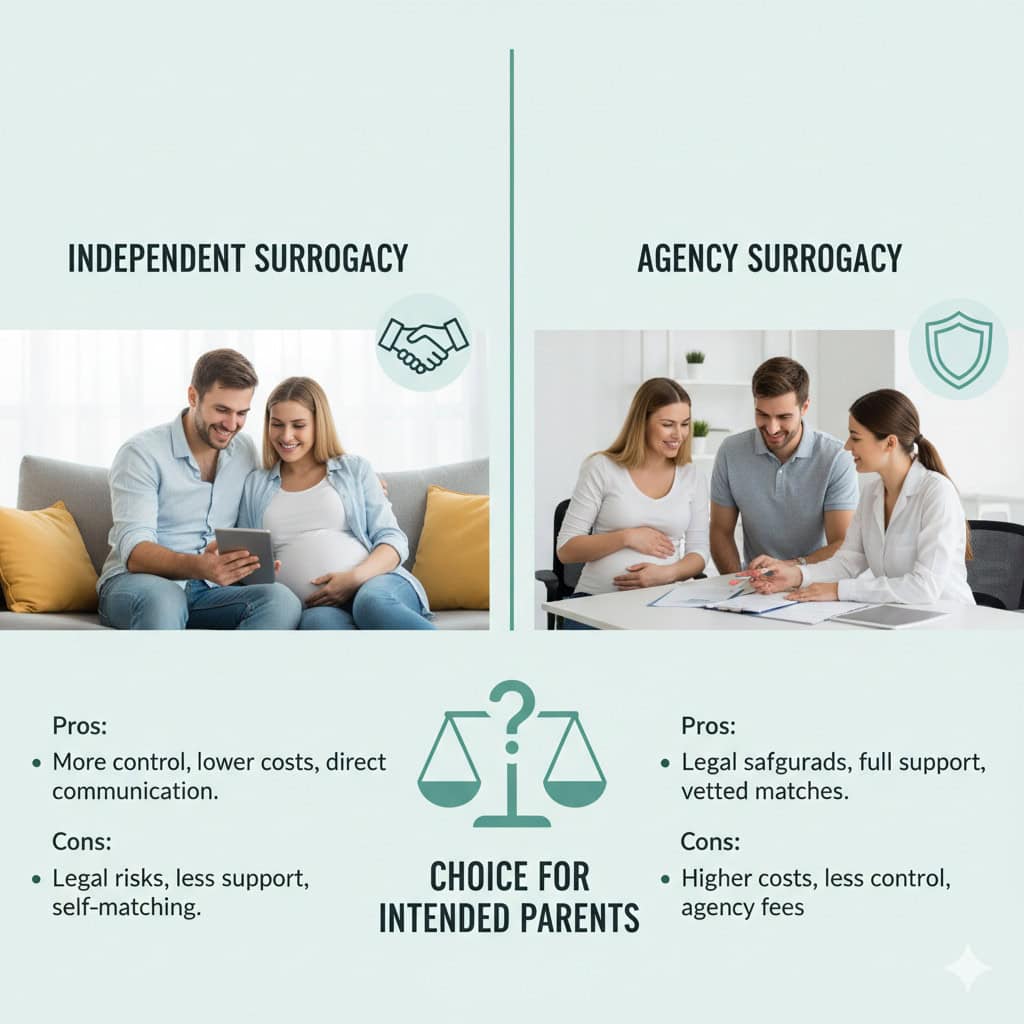
Choosing between a friend or family member as a surrogate and working with an agency is a big decision for intended parents. Both paths can lead to a successful outcome, but they shape the emotional, legal, and financial parts of your journey very differently. This guide breaks down the key trade-offs—how known surrogacy works, what agency support looks like, cost considerations, legal protections, and the emotional realities—so you can pick the option that fits your family. We also explain how BabyTree Surrogacy supports intended parents through a hybrid approach that blends personal connection with professional oversight.
What Is Known Surrogacy and How Does It Work?

People gather warmly, sharing friendly conversation in a relaxed setting, showing Babytree Surrogacy’s caring community. babytree
Known surrogacy means the surrogate is someone you already know—often a friend or family member. That existing relationship can make the experience feel more personal and emotionally supportive. The medical side typically involves in vitro fertilization (IVF) or related assisted-reproduction steps, and the legal side requires clear contracts and parentage orders so everyone’s rights and responsibilities are spelled out before birth.
What Are the Benefits of Using a Friend or Family Member as a Surrogate?
Using a friend or family member as a surrogate can offer meaningful advantages:
- Stronger emotional trust: A preexisting bond can make communication easier and create a more supportive atmosphere during the pregnancy.
- Potential cost savings: Without agency placement fees, some intended parents find the overall cost can be lower—depending on the arrangement.
- Comfort and familiarity: Working with someone you already trust can reduce anxiety around the process and logistics.
These benefits are powerful, but they come bundled with specific challenges to plan for.
How surrogates are compensated—altruistically, commercially, or professionally—shapes the financial expectations and ethics around any surrogacy arrangement.
Altruistic vs. Commercial Surrogacy Models & Compensation
At present, two main surrogacy models are commonly discussed: altruistic and commercial. Altruistic surrogates are unpaid, which some view as unfair given the demands and risks of pregnancy. Commercial surrogates receive payment, which raises concerns that financial motives could overshadow other reasons for participating. A third approach — described as a professional model — seeks to treat surrogates fairly by offering compensation while recognizing their caring motives and supporting ethical practice.
What Challenges Arise with Friend or Family Surrogates?
Known surrogacy can introduce emotional and logistical complications. Expectations about how involved the surrogate will be after the birth may differ between the parties. Close relationships can become strained by medical decisions, money conversations, or unexpected complications. Also, without agency coordination you may miss professional screening, counseling, and contract administration that help prevent misunderstandings about compensation and parental rights.
What Is Agency-Assisted Surrogacy and Its Key Advantages?
At Babytree Surrogacy, a professional meets with a happy couple, answering questions and guiding them in a welcoming office setting. babytree
Agency-assisted surrogacy means you work with an agency that manages the medical, legal, and emotional parts of the journey. A strong agency coordinates screening, matches, contracts, and ongoing support so both intended parents and surrogates have clear guidance and resources.
Key advantages include:
- Consistent communication and support: Agencies provide structured points of contact and systems for regular updates, which lowers the risk of delays or misunderstandings.
- Legal coordination: Agencies work with family law attorneys who draft clear contracts covering parentage, compensation, and dispute resolution.
- Thorough screening: Medical and psychological evaluations help ensure surrogate readiness and a stronger match.
- Transparency around outcomes: Agencies that share clinic partnerships and success metrics give intended parents better insight into expectations.
- Ethical, predictable fees: Clear fee schedules and compensation policies make budgeting easier and protect surrogate rights.
- Tailored guidance: Consultations and personalized plans help families understand options and next steps.
Together, these elements reduce uncertainty and make the process more manageable.
How Does an Agency Surrogate Provide Professional Support?
An agency-backed surrogate benefits from structured, professional support that typically includes:
- Dedicated case managers: A single point of contact who guides the surrogate through medical appointments, paperwork, and logistics.
- 24/7 on-call support: Access to a team for urgent questions or emergencies.
- Comprehensive screening: Medical, genetic, and psychological evaluations to help prevent complications and ensure readiness.
- Mental health resources: Counseling for both surrogates and intended parents to support emotional well-being.
- Customizable care plans: Flexibility to adapt the journey to each family’s needs.
- Post-match logistics: Help with scheduling, travel, and appointment coordination after a match is made.
These supports create a safer, more predictable experience for everyone involved.
What Are the Considerations and Limitations of Agency Surrogacy?
The main points to weigh with agency-assisted surrogacy include the following:
Considerations:
- Screening & support: Verify that the agency provides thorough medical, genetic, and psychological screening plus ongoing care.
- Legal coordination: Confirm the agency works with experienced reproductive family law counsel and provides clear timelines.
- Cost transparency: Ask for a detailed fee schedule, payment milestones, and contingency policies.
- Postpartum & contingency planning: Make sure the agency documents postpartum care and emergency protocols.
- Communication & logistics: Look for dedicated contacts and options for in-person support when needed.
Limitations:
- Multi-state logistics: Cross-state arrangements can add legal and logistical complexity.
- Compensation variability: Surrogate costs vary by location and applicable laws.
- Less local presence: If your match is out-of-state, in-person meetings may require travel.
- Newer agencies: Some newer organizations may have limited track records compared with long-established programs.
- Relationship preferences: If you prefer minimal contact with a surrogate, an agency that emphasizes relationship-building may not be the ideal fit.
Weigh these factors to choose an approach that fits your priorities and comfort level.
How Do Costs Compare Between Independent and Agency Surrogacy?
The costs for surrogacy vary. For agency-assisted journeys, typical medical screening, IVF fees, and medication costs often fall between $25,000 and $35,000, with total medical expenses in Los Angeles gestational journeys (including prenatal care) often reaching $50,000–$80,000. If you need an egg donor, acquisition costs commonly range from $20,000 to $30,000 in many California programs, with some Los Angeles journeys quoting higher totals once clinic and coordination fees are included. Background checks for all parties typically add about $1,750 in total at Baby Tree Surrogacy (approximately $1,500 for the surrogate and partner plus $250 for intended parents) in total.
There isn’t enough specific data here to present a direct, apples-to-apples comparison with independent (non-agency) surrogacy—costs depend on factors like local service pricing, whether an agency fee is charged, and whether compensation is provided to a known surrogate.
Ongoing debates about compensation and legal parentage influence both the cost and the legal framework for surrogacy arrangements.
Surrogacy Compensation, Legal Parentage & Adoption Model
In many places, surrogate motherhood is treated similarly to adoption: the birth mother (and her partner, if present) are presumed the legal parents, and intended parents must complete an adoption after birth. Outside of reimbursed pregnancy-related expenses, payment to surrogates is often restricted. Critics argue this fails to fairly compensate surrogates for their labour and the risks they accept. Rather than preserve the adoption framework while prohibiting payment, some experts recommend moving away from the adoption model so fair compensation can be considered within a different legal structure.
What Are the Typical Expenses in Using a Friend or Family Surrogate?
The typical expenses when working with a friend or family surrogate often include:
- Medical screening, IVF procedures, and medications: $25,000–$35,000 for IVF and screening, with total medical and prenatal costs often higher in a full gestational journey.
- Egg donor acquisition, if needed: $20,000–$35,000.
- Background checks for everyone involved: roughly $1,750 in total in Baby Tree’s current fee breakdown total.
What Are the Financial Implications of Agency-Assisted Surrogacy?
Agency-assisted surrogacy generally includes similar medical costs—screening, IVF, and medication—typically in the $25,000–$35,000 range for IVF and screening, with total medical and prenatal expenses often reaching $50,000–$80,000 in Los Angeles gestational surrogacy range, plus egg donor fees of $20,000–$30,000 when an egg donor is needed, with some journeys incurring higher clinic and coordination costs. Background checks add about $1,750 for surrogate and intended parent screening in Baby Tree’s current schedule. Total costs can change with surrogate location, state rules, and any agency placement fees; many families explore third-party financing to manage cash flow.
What Legal Safeguards Are Essential for Friend or Family Surrogacy?
When a surrogate is someone you know, legal protections become especially important. Essential safeguards include:
- Legal coordination: Work with counsel who specialize in family and assisted-reproduction law to draft contracts and outline pre-birth order timelines.
- Contract clarity: Agreements should spell out parental rights, compensation or reimbursements, responsibilities for medical costs, and contingency clauses.
- Sample contracts: Reviewing sample agreements helps set expectations before you proceed.
- Pre-birth orders: Understand the steps to secure parental rights before the child is born, where possible.
- Transparent cost breakdown: Document who covers medical, legal, and related expenses to avoid surprises later.
These measures reduce ambiguity and help protect relationships and legal outcomes.
Past legal disputes around commercial surrogacy highlight why clear contracts and uniform practices matter.
Commercial Surrogacy Contracts: Legal & Ethical Considerations
In July 2005, a high-profile case drew public attention to the legal confusion that can surround commercial surrogacy. A New Jersey man sought a compensated gestational surrogate through an attorney; the surrogate came from another state and the parties planned to complete the legal transfer of parental rights by adoption after the birth. The resulting publicity illustrated how differences in jurisdiction, contract language, and adoption procedures can create murky, ethically charged situations.
Why Are Legal Contracts Crucial in Known Surrogacy Arrangements?
Contracts in known surrogacy arrangements provide legal certainty. They document compensation, medical responsibilities, decision-making authority, and steps to secure parental rights (such as pre-birth orders). Clear agreements reduce conflict and protect the health, finances, and relationships of everyone involved.
How Does Agency Involvement Mitigate Legal Risks?
An agency helps manage legal risk by coordinating experienced reproductive family law counsel, using standardized contract language, and providing timelines and sample agreements. Agencies that maintain strong legal relationships can better navigate jurisdictional differences and help ensure parental rights are established smoothly.
What Emotional Dynamics Should Intended Parents Consider?
Emotional considerations are central to choosing a surrogacy path. Intended parents should evaluate:
- Support services: Choose agencies that offer mental-health counseling and emotional support for both intended parents and surrogates.
- Communication options: Look for clear channels and opportunities for in-person meetings when you want them.
- Interaction expectations: Decide how much contact you want with the surrogate and set that expectation early.
- Postpartum support: Ask what support is offered after birth for both the surrogate and your family.
- Long-term community: Some agencies maintain lifetime networks for families who want ongoing connection and support.
Addressing these areas upfront helps create a steadier emotional experience throughout the process.
How Can Emotional Challenges Impact Friend or Family Surrogacy?
Emotional challenges in known surrogacy can strain personal relationships if expectations differ or if difficult medical or parenting decisions arise. Feelings of attachment, anxiety, or disappointment can affect everyone involved. Professional counseling and frank, early conversations about boundaries, roles, and finances are essential to limit emotional harm and preserve relationships. For more practical guidance, see our FAQ for intended parents.
What Emotional Support Does an Agency Provide During Surrogacy?
Babytree Surrogacy group talks together in a friendly, welcoming setting, sharing ideas and offering support to each other. babytree
Agencies typically offer mental-health counseling for intended parents and surrogates, a surrogate concierge for complex medical scenarios, and a lifetime support network that connects completed families. Dedicated case managers and regular check-ins help manage emotional challenges as they arise.
Real Experiences from Intended Parents and Surrogates
“One intended parent couple shared that after years of failed treatments, partnering with BabyTree Surrogacy finally turned their dream of having a baby into reality. They described how the team walked them through every step, from matching with a surrogate who aligned with their values to keeping them closely updated even though they lived overseas, which helped them feel informed, safe, and emotionally supported throughout the entire journey. For them, leaving the hospital with their baby in their arms felt “surreal” and confirmed that choosing an agency with strong structure and communication was worth the investment.”
“From the surrogate side, one woman explained that she had worried about being treated like just another case, but her experience with BabyTree felt deeply personal and human. Coordinators checked on her regularly, made sure she understood every medical and legal step, and were always available to answer questions or calm worries, which gave her confidence in the process. She also highlighted how the agency’s surrogate community—through meetups and group support—made the journey feel less overwhelming and more empowering, and she described helping another family have a child as one of the proudest moments of her life.”
“Another surrogate story shows how agency support can make the emotional side of surrogacy easier to navigate. She shared that the BabyTree team “always check up on me to see how I’m doing and if I need anything,” and that they take time to answer every question so she never feels alone in the process. Monthly events and family-inclusive gatherings helped her feel appreciated and “like family,” reinforcing that a well-supported agency surrogate journey isn’t just medically and legally organized, but also emotionally caring for everyone involved.”
How Does BabyTree Surrogacy Support Known Surrogacy Through Its Hybrid Model?
BabyTree Surrogacy supports known surrogacy through a hybrid model that blends personal relationships with agency-level safeguards. By operating in California—a state with clear parentage and pre-birth order procedures—BabyTree reduces post-birth uncertainty and administrative hurdles. The agency also emphasizes comprehensive medical and psychological screening, transparent legal contracts that define parental rights and financial responsibilities, and hands-on case management to keep the process predictable and fair for everyone involved.
What Is the ‘Bring Your Own Surrogate’ Program and Its Benefits?
Our support for intended parents who already have a known surrogate lets intended parents work with a surrogate they already trust while receiving BabyTree’s legal, medical, and care coordination. This approach can lower placement costs, preserve personal connection, and ensure that all clinical and legal steps are handled correctly.
How Does BabyTree Ensure Legal, Medical, and Emotional Oversight?
BabyTree maintains oversight through:
- Legal guidance & contract transparency: Clear agreements define parental rights, compensation timelines, and dispute-resolution steps; working with reproductive family law specialists helps navigate jurisdictional issues.
- Comprehensive screening: Rigorous medical and psychological evaluations ensure surrogate readiness and safety.
- Dedicated case management: A single case manager supports logistics, appointments, and communication for each family.
- 24/7 support: An on-call team is available for emergencies and urgent questions.
- Mental health services: Counseling is offered to support emotional well-being for both surrogates and intended parents.
These practices create a structured, supportive environment for known-surrogacy arrangements.
Frequently Asked Questions
What should I consider when choosing between a friend or family surrogate and an agency surrogate?
Think about emotional closeness, legal protection, and finances. Known surrogacy offers trust and familiarity but can complicate relationships and requires careful legal planning. Agency surrogacy brings professional screening, legal safeguards, and ongoing support, which reduces certain risks. Your comfort level with those trade-offs will guide the right choice.
How can intended parents prepare for the emotional challenges of surrogacy?
Prepare by seeking counseling before and during the process, having open conversations about expectations, and joining support groups or connecting with other families who’ve been through surrogacy. Clear communication and mental-health support are the best defenses against emotional strain.
What role does legal counsel play in the surrogacy process?
Legal counsel drafts binding agreements that define parental rights, responsibilities, and financial terms. Attorneys experienced in assisted-reproduction law also help obtain pre-birth orders and navigate differences between state laws—critical steps for protecting everyone involved.
What are the potential risks of using a friend or family member as a surrogate?
Risks include emotional strain on relationships, unclear expectations about compensation or involvement, and limited professional oversight. Medical or legal surprises can heighten tension. Clear contracts and counseling help manage these risks.
How does BabyTree Surrogacy’s hybrid model benefit intended parents?
Our hybrid model combines the personal comfort of a known surrogate with agency-level legal, medical, and emotional support. That means you can keep a trusted relationship while we handle screening, contracts, and case management to reduce administrative and legal stress.
What should intended parents know about surrogate compensation?
Compensation varies by arrangement. Agency-assisted surrogates are typically compensated and protected by contract. Known surrogates may be unpaid or reimbursed; either way, discussing and documenting reimbursement and expectations up front prevents confusion later.
What support services are available for intended parents during the surrogacy process?
Support commonly includes mental-health counseling, legal guidance, and a dedicated case manager. Many agencies—including BabyTree—offer 24/7 support, educational resources, and community connections with other families who have completed surrogacy journeys.






0 Comments